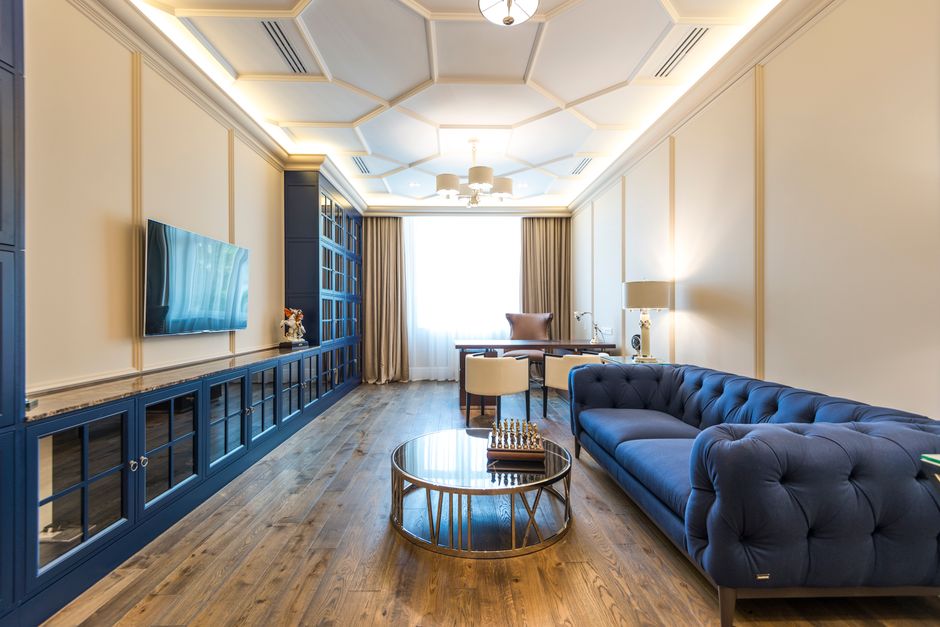
If you're living in a compact Sydney home and wondering how to make every square metre work harder, built-in joinery could be the most impactful upgrade you make, from window seats and bookshelves to hidden storage and full entertainment walls. This guide walks you through the smartest options, how to plan them properly, and what actually suits a small Sydney floor plan.
Why Living Room Joinery Transforms Small Sydney Homes
Sydney homes (particularly terraces, apartments and post-war bungalows in the inner suburbs) are rarely generous with space. The average Australian living room sits somewhere between 20 and 35 square metres, and in a city where property prices remain fierce, most families simply can't afford to move to something bigger. That's where living room joinery quietly does its best work.
Unlike freestanding furniture, built-in joinery is designed around your specific walls, ceiling heights and floor plan. It eliminates the awkward gaps, the wobbling flat-pack units and the visual clutter that make small rooms feel even smaller. Done well, it creates a sense of permanence and considered design that adds genuine liveability, and measurable resale value.
Built-in Joinery Makes Space Work Smarter
Sydney homeowners have long recognised what renovation shows have made mainstream. When The Block season 11 showcased how thoughtful built-ins could elevate an ordinary living room into something both functional and beautiful, it reflected a shift already happening in homes across Surry Hills, Newtown and the Northern Beaches.
The real value isn't just aesthetic. Custom joinery uses every centimetre (from floor to cornice, corner to corner) in ways off-the-shelf solutions never can. For small Sydney homes especially, that efficiency isn't a luxury. It's a practical necessity that changes how comfortable a home actually feels to live in, day to day.
- Maximises floor space by building upward and into alcoves
- Reduces visual noise with unified, tailored cabinetry
- Adds storage without sacrificing style or circulation space
Living Room Joinery: Window Seats, Bookshelves and Entertainment Walls: What Works Where
Choosing the right living room joinery comes down to understanding how each piece interacts with your specific space. In compact Sydney homes, where floor area is at a premium, the wrong built-in in the wrong spot creates clutter rather than comfort. Here's how to match each joinery type to the spaces where it genuinely earns its place.
Window Seats: Best Beside Bay Windows and Alcoves
Window seats thrive wherever there's a natural recess, a bay window, a deep sill, or a wall that steps back even slightly. In a typical Sydney terrace or apartment, a window seat 30–45 cm deep transforms an otherwise awkward corner into a reading nook, guest sleeping spot, and hidden storage chest rolled into one. Avoid installing them on walls that receive no natural light; the whole appeal is the outlook and the warmth.
Bookshelves: Floor-to-Ceiling Beats Freestanding Almost Every Time
Built-in bookshelves work on almost any wall, but they earn the most in living rooms with high ceilings or long blank walls. Running shelves floor-to-ceiling draws the eye upward, making a small room feel taller. The practical rule of thumb: leave at least 30 cm of shelf depth for standard books, and plan for adjustable shelf pins so the unit adapts as your storage needs change over time.
Entertainment Walls: Centring the Room Without Dominating It
An entertainment wall (housing a TV, media components, and decorative storage) works best on the longest uninterrupted wall in the living room. In smaller Sydney homes, the key is restraint: mixing open display niches with closed cabinetry keeps the unit from feeling heavy. A good benchmark is that the joinery should occupy no more than two-thirds of the wall's width, leaving breathing room on either side and preventing the space from feeling boxed in.
Hidden Storage Solutions in Living Room Joinery for Compact Floor Plans
When every square metre counts, living room joinery earns its keep not just by looking good, but by quietly absorbing the clutter that makes small Sydney homes feel cramped. The most effective hidden storage solutions work with your floor plan rather than against it, tucking away everyday items without adding visual bulk to already modest rooms.
Some of the hardest-working approaches for compact layouts include:
- Toe-kick drawers built beneath floor-level cabinetry, ideal for storing flat items like board games, spare linen or seasonal décor
- Lift-top ottomans integrated into joinery bases: giving a window seat or bench dual purpose without sacrificing a centimetre of floor space
- Recessed wall niches with flush-panel doors that sit perfectly flat, so storage disappears entirely into the wall when not in use
- Behind-TV cabinetry with push-to-open mechanisms: eliminating visible handles and keeping the entertainment wall sleek
For Sydney apartments and terrace houses, where rooms often sit between 14 and 20 square metres, the 2/3 rule is worth keeping in mind: joinery should occupy roughly two-thirds of any given wall, leaving breathing room so the space doesn't feel boxed in. A skilled joiner can design storage that hits that balance precisely, using full-height cabinetry on one wall and lower, bench-height units elsewhere to vary the visual weight.
Material choice matters here too. Matte lacquered finishes, integrated grain-matched panels and handleless doors all reduce the "furniture" look of storage, making it feel like part of the architecture rather than an addition. For more practical renovation advice tailored to Australian homes, browse the Renovation & Design section, or explore broader Home & Living guides covering layout and comfort improvements.
Planning Your Living Room Joinery: Dimensions, Rules of Thumb and Budgets
Getting the proportions right is everything when you're commissioning built-in living room joinery for a compact Sydney home. Squeeze in too much timber and the room feels like a corridor; leave too little and you've wasted a renovation budget on something that barely makes a dent in your storage problems.
Key Dimensions Worth Knowing
- Bookshelf depth: 250–300 mm suits most paperbacks and décor objects without eating floor space.
- Window seat height: 450–500 mm is the comfortable sitting height; aim for at least 400 mm of internal depth to make lift-lid storage worthwhile.
- Entertainment wall cabinets: Allow 600 mm depth for AV equipment bays; upper display shelves can drop back to 300 mm to keep the unit visually light.
- Ceiling clearance: Running joinery to within 50 mm of the ceiling (or hard to the cornice) makes rooms read taller, a useful trick in sub-3 m ceilings common in older Sydney terraces.
The Two-Thirds Rule
A widely used guideline suggests built-in cabinetry should cover no more than two-thirds of any single wall, leaving breathing room so the space doesn't feel institutionalised. On a 4 m wall, that's roughly 2.6 m of joinery, enough for a generous entertainment unit flanked by shelving without overwhelming the room.
Budget Benchmarks for Sydney
Expect to pay $800–$1,500 per linear metre for custom-built cabinetry from a reputable joiner, depending on material choice and hardware. Flat-pack hybrids with custom face frames can reduce that by 20–30%. For inspiration on what well-executed bespoke work actually looks like at different scales, the Brennan Cabinetry living room joinery gallery is a practical reference point before you brief your own tradesperson.
Always build a 10–15% contingency into your quote, unexpected wall irregularities and off-square corners are the norm in Sydney's older housing stock.
Choosing the Right Living Room Joinery Style for Your Sydney Home
Even the most thoughtfully planned living room joinery can fall flat if the style clashes with your home's character. In Sydney, where Federation cottages sit a suburb away from sleek Scandinavian-inspired apartments, getting the aesthetic right is just as important as getting the measurements right.
Match the Joinery to the Architecture
Start by reading the bones of your home. Older homes with ornate cornices and timber floors tend to suit joinery with shaker-style doors, beaded detailing and warm timber veneers. Contemporary townhouses and new builds lean toward flat-panel fronts, integrated handles and matte or two-tone finishes. Forcing a mismatched style rarely works: it tends to make bespoke pieces look like flat-pack afterthoughts.
Practical Style Considerations for Smaller Spaces
For compact Sydney homes, a few design principles consistently deliver results:
- Floor-to-ceiling height draws the eye upward and makes rooms feel taller, not smaller.
- Consistent tones: joinery that matches or closely echoes wall colour, reduce visual clutter.
- Recessed handles or push-to-open mechanisms keep surfaces clean and uninterrupted.
- Mixed open and closed storage lets you display personality without sacrificing practicality.
Budgeting Honestly
Custom joinery in Sydney typically ranges from $800 to $2,500 per linear metre, depending on materials, complexity and the joiner you choose. Semi-custom options from specialist suppliers can offer a middle ground, more flexibility than flat-pack, at a fraction of fully bespoke pricing. Always get at least two to three quotes, and ask to see completed projects similar to your own home's style before committing.
Built-in joinery is one of the most rewarding investments a Sydney homeowner can make, adding storage, structure and genuine warmth to everyday living. Whether you start with a simple window seat or commit to a full entertainment wall, the key is planning carefully, choosing a style that belongs in your home, and working with a joiner who understands both craft and your space. Done right, it's comfort you'll feel every single day.